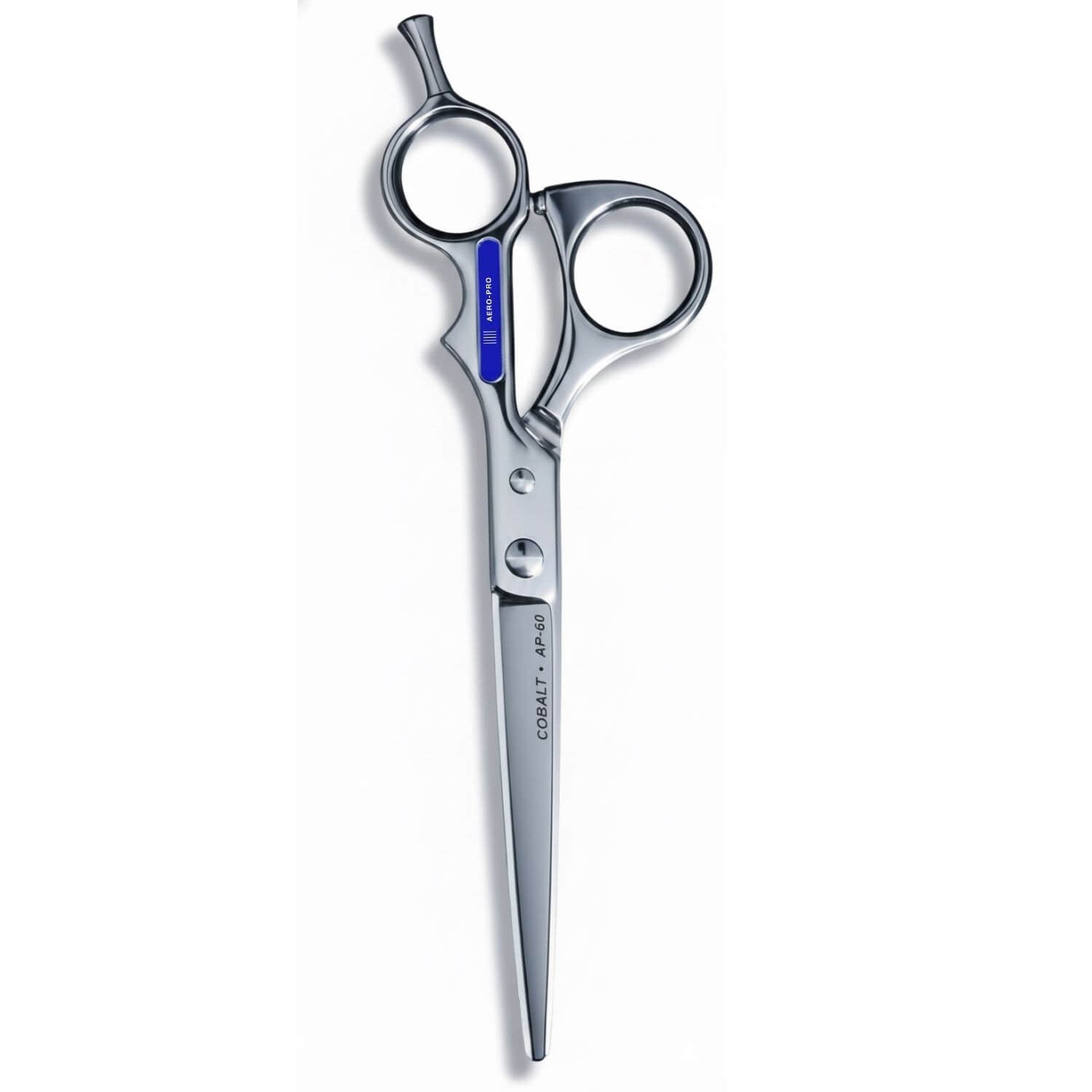
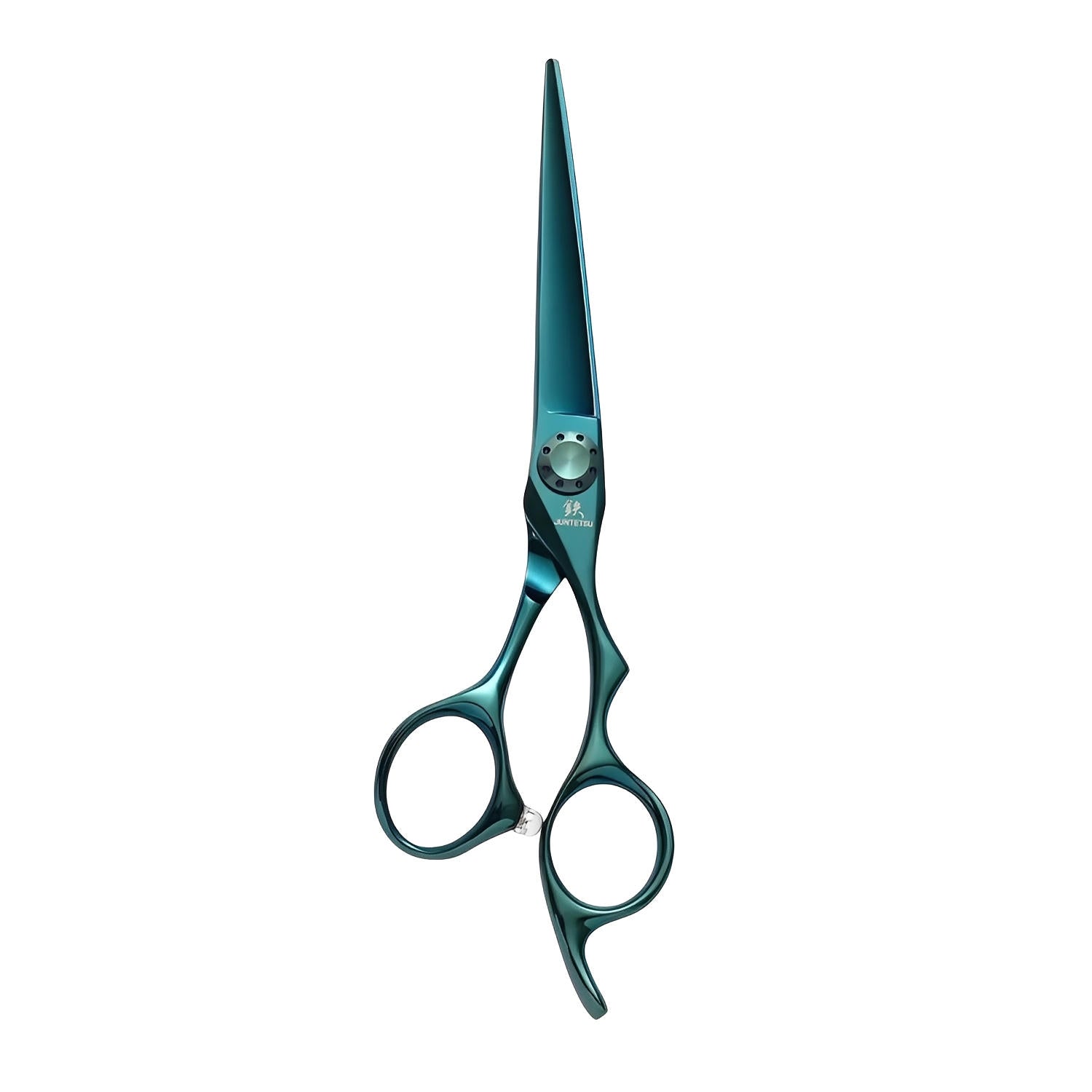
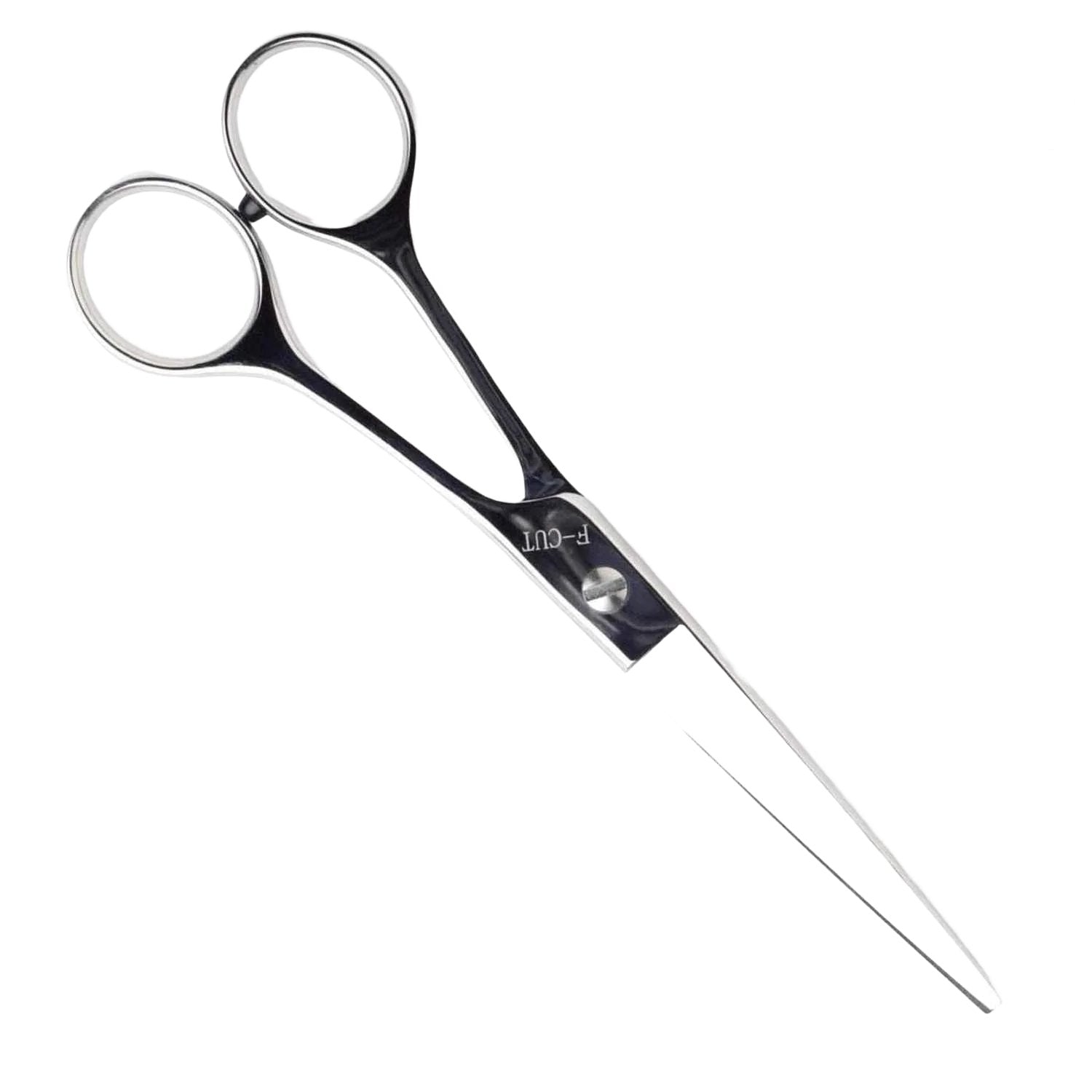
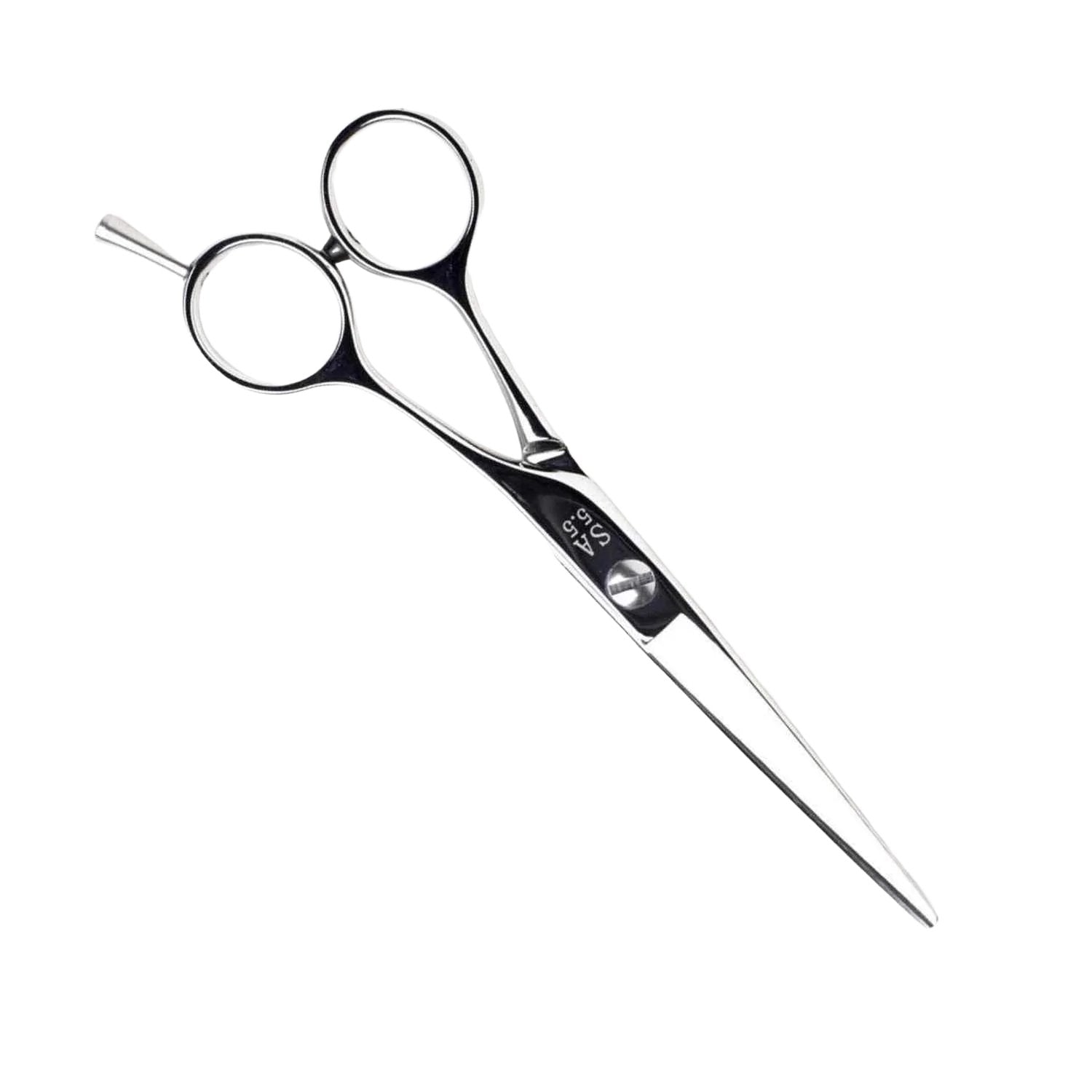
Juntetsu and Yasaka sit naturally side by side. Both make convex-edged cutting shears that slice cleanly and close quietly. Both are confirmed in origin: Juntetsu shears are handmade in Japan, and Yasaka shears are made in Japan. Yet they come at the shear from opposite directions. Juntetsu offers many answers to each question; Yasaka offers one careful answer to each job.
This comparison follows the order in which most stylists actually decide: the edge, the handle, the length, the steel, the thinner and, last, the shape of the range itself.
At a glance
| Detail | Juntetsu | Yasaka |
|---|---|---|
| Origin | Handmade in Japan | Made in Japan |
| Size of range | Large: cutters, thinners and many sets | Compact: a few shapes, each with a clear job |
| Edge | Convex, in four variations | Clam-shaped convex, consistent across cutters |
| Handles | Mostly 3D offset, plus crane, swivel and classic | Traditional, classic, offset, 3D offset, semi offset, Hennessy, French, lefty |
| Main steels | VG10, VG-10 cobalt, ATS-314 cobalt, 440C | ATS314 cobalt, SUS440C, VG10 |
| Finishes | Polished, mirror, matte black, rose gold and more | Polished |
| Thinners | Tooth counts from 10 to 42, some with a cut ratio | YS thinner with 16, 20, 30 or 40 teeth |
The edge
Both makers sharpen to a convex edge, and both will feel smooth to a stylist used to a bevel edge. The difference is variety.
Yasaka repeats one edge, which it calls clam-shaped convex, across nearly every cutter. Move from a Yasaka Offset to an SK Long or a KM and the cutting line behaves the same way. Only the blade outline changes, as on the Dry Cut's wide, curved blade.
Juntetsu describes four variations: a hand-honed hamaguri, the stepped Dan-Ha on the Aero-Pro, a 45 degree convex on the Apex, Vertex Slide and Mastersmith, and the MIKURO EDGE on the Obsidian. It also varies the blade profile more, with sword shapes on the Sword, Kenshi, Tsunami Elite and Zenith.
If you value consistency between your shears, Yasaka makes that easy. If you want to choose an edge for a technique, slide cutting on a sword profile, for instance, Juntetsu gives you more to choose from.
The handle
Here the makers reverse roles. Juntetsu, so broad elsewhere, settles mostly on one family: the 3D offset, with the crane super offset and the swivel for stylists who want a lower or rotating thumb, and a level classic handle on the Black Cobalt and VG Black.
Yasaka, so compact elsewhere, spreads across handles. It offers traditional and classic level handles, a standard offset, the KM's 3D offset, a semi offset on the 7.0 inch barber shear, a Hennessy handle on the Dry W, a French handle on the F-CUT and a lefty offset.
If you cut with an open, level hand, Yasaka has more level-handled cutters. If you want a deep offset, a crane or a swivel, look to Juntetsu.
Length
Both cover the working range from compact detail shears to long barber blades. Yasaka's Offset and Traditional lines run 4.5 to 6.0 inches; the SK Long and the barber shear reach 7.0. Juntetsu runs from 4.5 inches on the VG10 Offset to 7.0 inches across several lines, with in-between sizes such as 5.25, 5.75 and 6.75 inches on the Night, the Precision VG10 and the Kenshi.
Yasaka's model codes name the size, which makes it easy to match a shear you already own. Juntetsu's in-between sizes help if 5.5 feels short and 6.0 feels long.
The steel
Yasaka's most common steel is ATS314 cobalt, with SUS440C on the SA and YA models and VG10 on the SSS. Juntetsu's most common is VG10, with VG-10 cobalt, ATS-314 cobalt and 440C on particular lines. Both makers use cobalt steels for some of their longer or harder-working shears.
Treat steel as part of a shear's character rather than a ranking. A harder steel tends to hold its edge longer; a slightly softer one is quicker for a sharpener to restore.
Thinners
Yasaka keeps it simple. The YS thinner is one 6.0 inch offset design offered with 16, 20, 30 or 40 teeth, and the same thinner is the partner in its sets, where you choose the tooth count.
Juntetsu offers more individual thinners: the Chomper with 10, 16 or 21 teeth for weight removal, the Aero-Pro with 30 or 40 teeth, a 40-tooth Kenshi texturizer, a 42-tooth Rose Limited Edition thinner and a wave-profile Matte Black. Some list a cut ratio as well as a tooth count.
Sets
Juntetsu offers matched sets across most of its lines, each in the line's own steel and finish. Yasaka offers three: the Offset set and the Traditional set, with your choice of cutter length and thinner, and a Professional Barber set built on the 7.0 inch cutter.
Which suits you
Choose Yasaka if you know your length and handle, want the same edge on every shear you own, cut dry often, or prefer a plain polished tool with a model code that tells you what it is.
Choose Juntetsu if you want to pick an edge and blade profile for a technique, prefer a deep offset, crane or swivel handle, or want a matched set in a particular steel or finish.
Owning one of each is also a sound plan: a Yasaka for precise, consistent everyday cutting, and a Juntetsu sword or swivel for slide cutting and long days.
Care for either
The care is the same for both. Wipe the blades after each client, put a drop of oil at the pivot at the end of the day, keep the shear in a closed case, and send it to a sharpener who works on convex edges. Prices are in Canadian dollars.
Read the full Juntetsu story and Yasaka story, or open the Juntetsu collection and the Yasaka collection to compare product pages side by side.