- Origin
- Handmade in Japan
- Models here
- 59
- Includes
- 25 cutting, 18 thinning, 16 sets
- Lengths
- 4.5″ to 7.0″
Juntetsu shears are handmade in Japan. Hold one with the blades almost closed and look along the edge towards a window: the gap narrows evenly from pivot to tip, with no flicker of light where the blades part. That evenness is what hand finishing gives a shear, and it is the first thing to notice in every Juntetsu, from the simplest offset cutter to the long cobalt barber blades.
The collection is the largest on our shelf. It is easier to understand as a set of choices than as a list of names: the steel, the shape of the edge, the profile of the blade, the handle and the way the tension is set.
The steels
Each product page names the steel, and Juntetsu works with several.
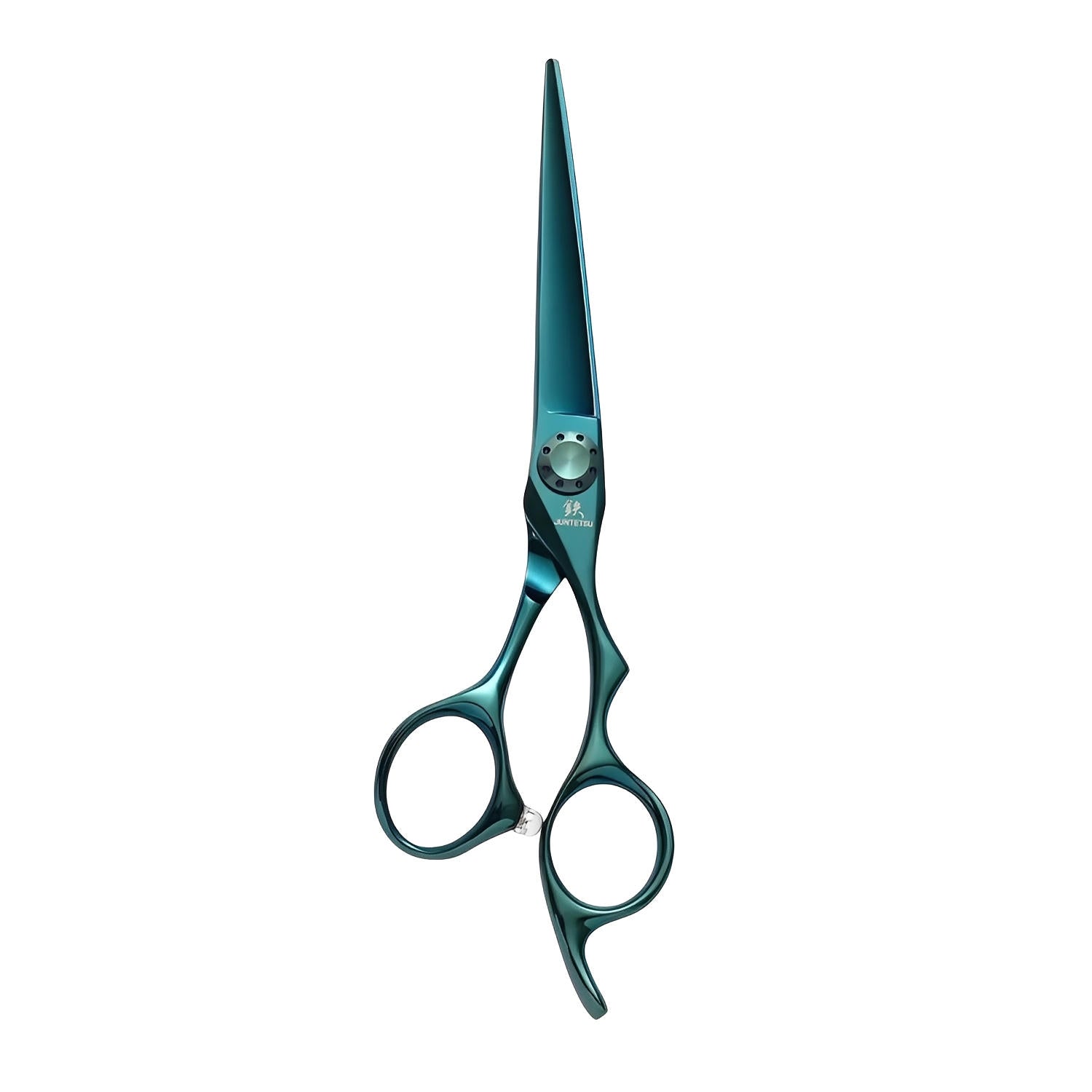
- VG10. A stainless steel that takes a fine, keen edge. It runs through many lines: the Precision VG10, the VG10 Offset, the Azure, the Rose Gold, the Night, the Zenith, the Tsunami Elite, the Master Flow and the VG Black.
- VG-10 cobalt. The Apex, the Vertex Slide and the cobalt texturizing shear use a cobalt-bearing VG-10 listed as Takefu steel.
- ATS-314 cobalt. A harder, cobalt-rich stainless steel used for the Black Cobalt, the Kenshi cutter, the Sword and the 7.0 inch Mastersmith.
- 440C. The Hanami and Matte Black lines use 440C, a dependable stainless steel for daily work.
Read the steel as one part of a shear's character. A harder steel holds its edge longer between sharpenings; a slightly softer one is quicker to bring back. Neither is a ranking.
Four ways to a convex edge
Almost every Juntetsu cutting shear has a convex edge: the blade curves gently down to a very fine cutting line, so it slices rather than presses. Within that idea, the product pages describe four variations.
- Hand-honed hamaguri. The traditional clamshell convex, honed by hand. You'll find it on the Black Cobalt, the Crane, the Swivel, the Kenshi, the VG Black and the Rose Limited Edition.
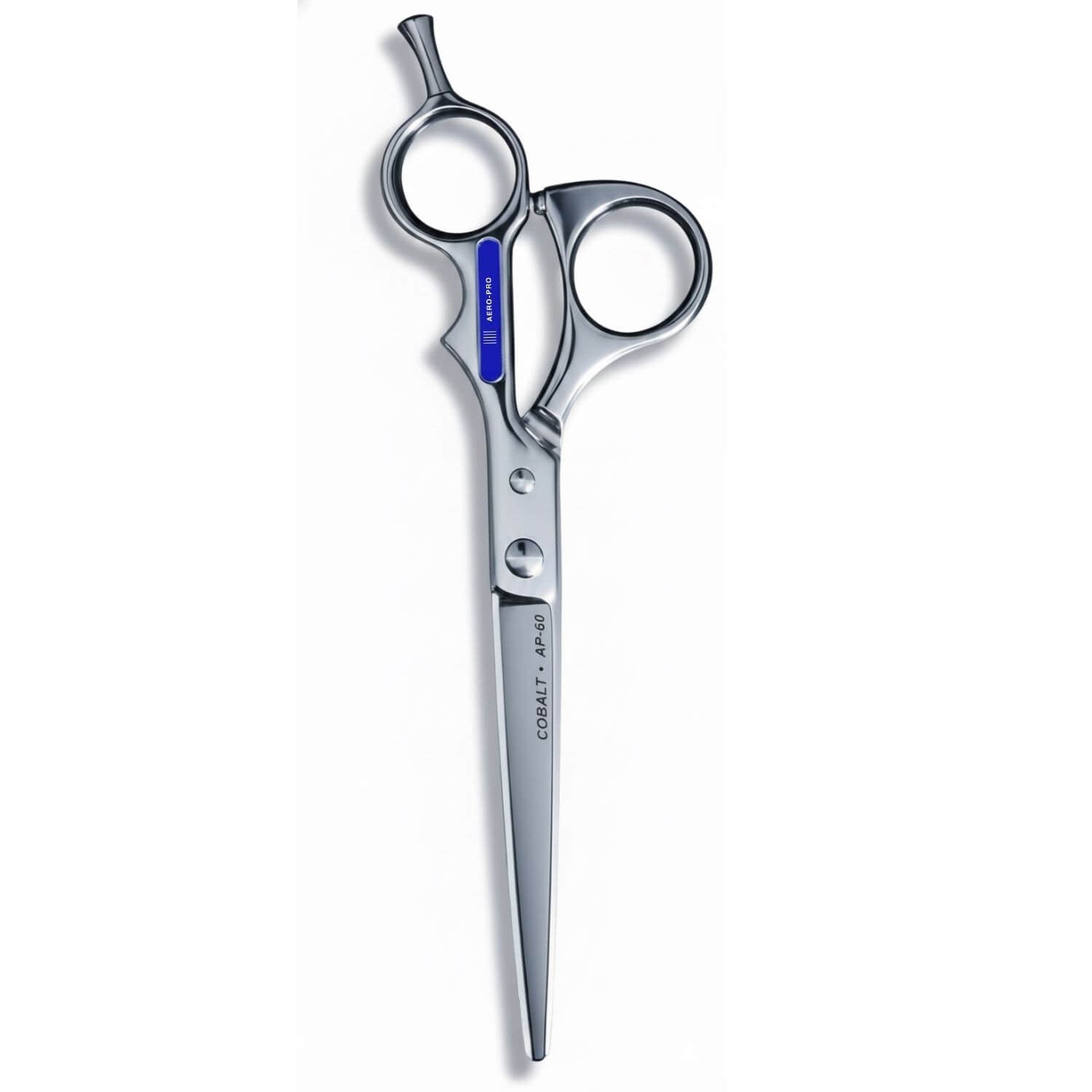
- Dan-Ha stepped convex. The Aero-Pro's edge, ground in a small step so the blades close with very little drag.
- 45 degree convex. A slightly sturdier angle on the Apex, the Vertex Slide and the Mastersmith, chosen to give the tip more strength.
- MIKURO EDGE. The Obsidian line's precision convex, used on both the cutter and the thinner.
All four want the same care: a soft cloth after each client, a case between salons and a sharpener who works on convex edges.
Blade profiles
The edge is the cutting line; the profile is the shape of the whole blade.
- Straight blades suit point cutting and precise detail.
- Sword profiles curve slightly along the back of the blade. The Sword, the Kenshi, the Tsunami Elite and the Master Flow use them, and the Zenith uses a one-third sword angle. A sword blade glides through slide cutting and long sections.
- Slide blades are shaped for slide cutting first, as on the Vertex Slide.
The Kenshi cutter shows how a profile changes feel: its 5.75 inch size is described as feeling like 6.0 inches, and its 6.75 inch like 7.0.
Handles
Juntetsu leans towards the offset handle. Most models use a 3D offset, which lowers the thumb ring and angles it so the thumb rests close to the palm.
- Crane super offset. The thumb ring drops further still, which lets the elbow stay low through long cutting days.
- Swivel offset. The thumb ring rotates, following the hand as it turns around the head.
- Super offset. The Obsidian line's own deep offset.
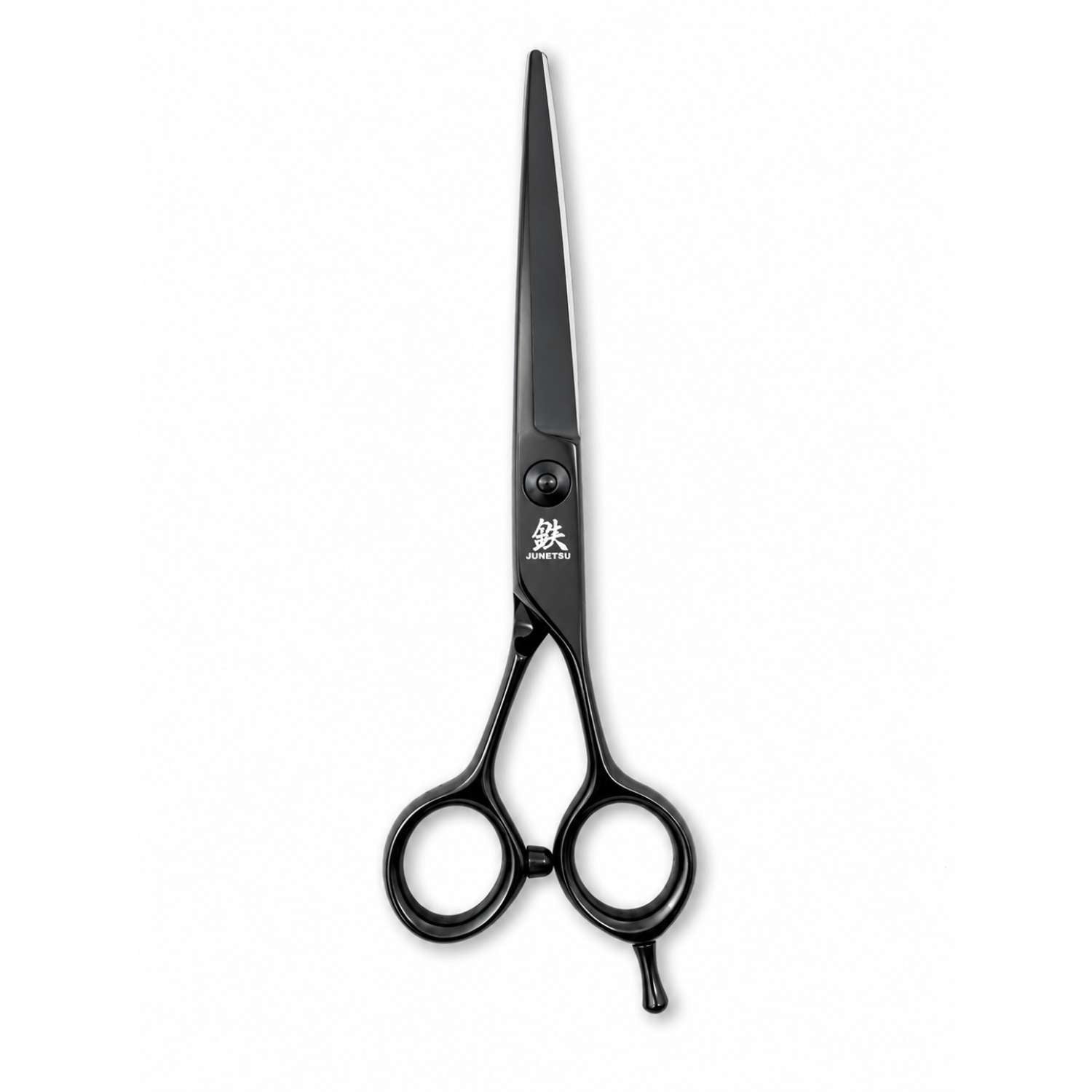
- Classic symmetric. The Black Cobalt and VG Black cutters keep both rings level, for stylists who cut with an open hand.
Many models carry a removable finger rest, and the VG Black thinner adds removable finger inserts for slimmer fingers.
Setting the tension
How a shear holds its tension shapes the close. Juntetsu uses several systems: ball-bearing adjustment screws on the Crane, the Kenshi and the Matte Black; a Tokyo ball-bearing system on the Sword and the Mastersmith; a click adjustment on the Apex and the Vertex Slide; a flat screw on the Aero-Pro and the Zenith; and a hand-adjustable dial, no key required, on the Swivel and the VG Black.
Thinners and texturizers
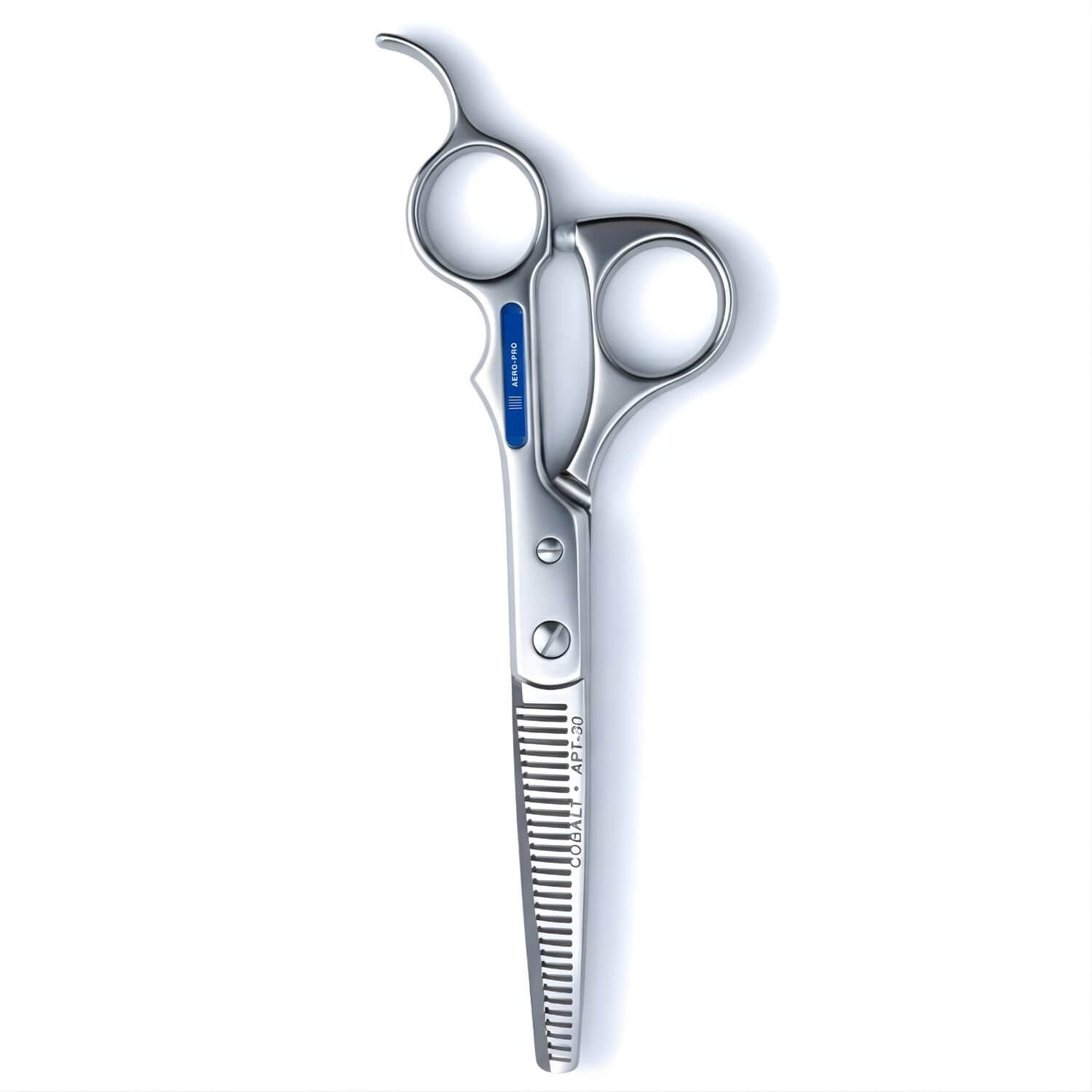
The thinning shears are listed with tooth counts or cut ratios. The three Chomper thinners offer 10, 16 or 21 teeth for taking out weight. The Aero-Pro thinner comes with 30 teeth at a listed 30% cut ratio or 40 teeth at 40%. The Tsunami Elite texturizer is listed at a 20% cut ratio. For fine blending there are the 40-tooth Kenshi texturizer and the 42-tooth Rose Limited Edition thinner; the Sword texturizer has 31 milled teeth, and the Matte Black thinner uses a wave profile.
Many lines are also offered as sets, a cutter and thinner made to feel the same in the hand.
Who Juntetsu suits
Juntetsu suits stylists who slide cut and point cut often, who want a convex edge and a deliberate choice of handle, and who are ready to look after a hand-finished tool. Barbers will find long blades in the Ergo Barber, the Sword and the Mastersmith.
Choosing, and caring
Begin with the job and the length you use now. Then choose the handle, then the edge and steel. Wipe the blades after each client, oil the pivot at the end of the day and keep the shear cased. Prices are in Canadian dollars.
To see how Juntetsu sits beside another maker with a convex edge, read Juntetsu and Yasaka compared. Or browse the Juntetsu collection.